Fair warning people, if you also read my e-Clippings blog (that goes for both of you), you'll see me post this there as well...let's just say I am fired up. Wanna know why? Try looking here. What you'll see at that link is a bunch of stories about how Google's stock took a monster hit today (12-20% depending on what time you're looking at). Why? Because the company ONLY reported a 4th quarter growth in profits of 82%!!!! Shameful!! Their net income was $372 million compared with $204 million last year. Their crime? They missed economic projections. Because of some tax issues, etc. blah blah blah. They are still approx. 20% ahead of Yahoo! in market share.
Why is Mark fired up about this? Why am I so upset that I'm speaking in the third person? Because how in the world are you supposed to convince ANYBODY to invest in anything as hard to touch as the value of learning when these freaking idiots are willing to dump Google stock when its profits only rose by 82%!?!? I swear to you, the short-sighted nature of the American Stock Market is both staggering and appaling. I don't even own Google stock and yet I am horrified by these reactionary market spasms. Someone tell me what fundamental of Google's business changed by 20% overnight? NOTHING!!
You (present company and readers excluded of course) knee-jerk, reactionary, no vision, short-term, Gordon Gecko wannbe, fundamentals ignoring, panic stricken, ridiculous caricatures of humans! I swear you will be the death of innovation and creativity in the American marketplace if not the world!
Tuesday, January 31

Monday, January 30
Peter Struck Me (actually something Peter wrote struck me)
I'll keep this little trend of responding to and playing off other's posts going here - Peter wrote:
Here is a picture illustrating some of what I mean:

That's a screenshot of my desktop with some Widgets running. One is a drug reference manual, one is pulling RSS feeds from the NY Times (could be changed to be ANY RSS feed), one is a customizable flashcard widget and one is a lookup program for area codes. They are all free. They are all customizable with no scripting skills. I think they can allow a user to construct an environment customized to their ever-changing identity. I also think they point one way forward for us - to build platforms instead of applicaions and to teach people how to construct and operate in these environments and not try to teach them what to learn. We can't keep up with that anyway.
I'll end my little rant with one final thought - do we assume that in the absence of instruction that no learning occurs? If the answer is that of course we know that learning occurs regardless of the presence of really well-designed instruction, then shouldn't we look at how that learning already occurs and look to maximize those opportunities for people?
"I would suggest we start looking at what I call the sense of “identity” (personal, social, professional), a permanently evolving entity or bundle of beliefs that is nevertheless based on some deeply stable elements (personality, culture, social status, etc.). By failing to take into account this major factor, the officially recognized pleasure and pain involved in learning become superficial or trivial and we’re left wondering why the planned training didn’t work (face to face, eLearning or simulation, it matters little)."Yea! Exactly! I think this is such an important idea not only because we need to understand this to create better opportunities for learning (note I didn't say create better learning) but because to a degree that has never been possible before, users can now create their own learning experiences based on this sense of "identity" that Peter describes so well.
Here is a picture illustrating some of what I mean:
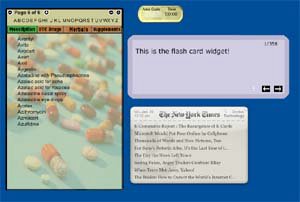
That's a screenshot of my desktop with some Widgets running. One is a drug reference manual, one is pulling RSS feeds from the NY Times (could be changed to be ANY RSS feed), one is a customizable flashcard widget and one is a lookup program for area codes. They are all free. They are all customizable with no scripting skills. I think they can allow a user to construct an environment customized to their ever-changing identity. I also think they point one way forward for us - to build platforms instead of applicaions and to teach people how to construct and operate in these environments and not try to teach them what to learn. We can't keep up with that anyway.
I'll end my little rant with one final thought - do we assume that in the absence of instruction that no learning occurs? If the answer is that of course we know that learning occurs regardless of the presence of really well-designed instruction, then shouldn't we look at how that learning already occurs and look to maximize those opportunities for people?
SimWord of the Day: Paths (Player-created)
Players create paths on maps, especially in tycoon style games, to connect processes and places, and direct and sometimes limit units' movements.

Paths can be:
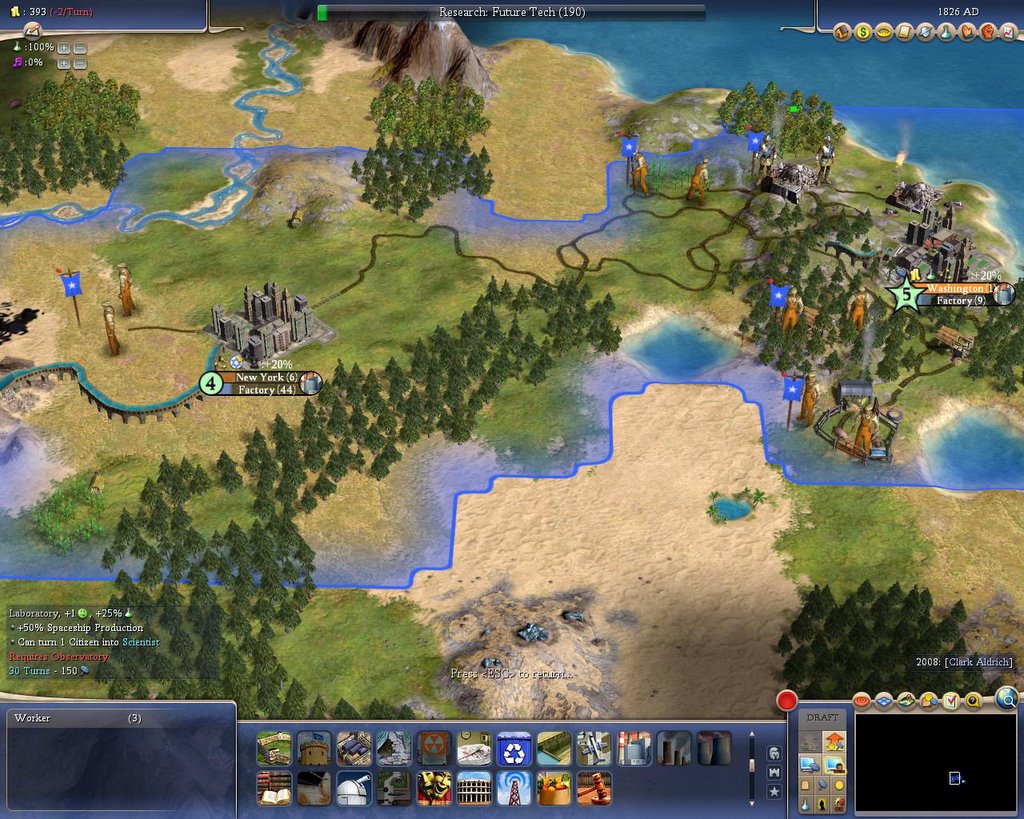
Paths can be:
- Bidirectional or one way;
- Narrow/bottleneck or broad;
- Free to use or toll;
- Expensive to build or cheap or free;
- Too few or too numerous;
- Connect the right things or connect the wrong things;
- Perment, or temporary;
- Wear down with use, or increase with use;
- Aligning of interests;
- Physical, contractual, virtual, informational;
- Connecting of people, processes, work units, or even information and alignments.
What is so interesting to me about paths is that CEO's spend so much of their time talking about them. I can't count the number of times I have heard:
- How do I create better communication between different departments? How do I get different groups to know what other groups are doing.
- How do I build a relationship between customers and designers?
- How do I get better access to another company's technology or markets?
- How do I access the design skills of Italy, the tech savy of San Francisco, and the cheap labor of China?
- How do we align with shareholders?
- How do I find the right person for the job?
- Are the current organizational lines right, or should I reorganize (destroy old paths and create new ones)?
- Xerox' PARC research center has a permanent video link to their sister research organization in France, connecting two well traveled hallways.
- Every canal ever dug.
- This very blog entry is a path between my thoughts and at least four other people (I am not sure what the actual number is. It might be as high as twelve).
Like many of these SimWords, everyone could probably write a great paragraph on when and why to build new paths and destroy old ones. Yet the effective, no, intuitive ability to do that across a multitude of fronts differentiates between success and failure for many of us.
Sunday, January 29
Is you is or is you ain't my ism?
I started writing this as a reply to Don’s message about behaviourism (see below) and the link to the film. It quickly got too long to be a simple reply and so I’m posting it here.
I love the whole idea – and social practice -- of taking an obvious truth and setting up elaborate experiments to prove it. The real art is to leave people with the impression that you've summed up everything that needs to be said about the subject simply because you have proved that what is obvious is true. People are not only paid to create this proof of the obvious, but they even make careers out of it. And it doesn't stop there: the clever ones can turn it into an "ism".
Do you realize how many people would be unemployed if this wasn’t the case (today as well as in 1948)? But the benefits to society as a whole are even greater. By turning their obvious truth into an ism clever scientists stimulated the economy. How many people that then made careers out of studying the ism (and extending its scope) would have been absolutely idle (and on welfare) if it hadn’t existed?
Behaviorism is the one of the star isms of the 20th century. If I were a historian, I would call the 20th century the “century of isms”. A few years ago I visited an exhibition on early 20th century art at the Gropius museum in Berlin with Jay Cross and was particularly struck by the fact that in the period represented (roughly 1900 to 1930) every artist seemed to belong to an ism, or created one as a brand for his innovative style. Many of them I had never heard of.
Behaviorism teaches us that you can’t learn without motivation and that motivation can be associated with the pleasure (and pain) principle. From there it’s easy – and “scientifically necessary” (question of good marketing) -- to maintain that this accounts for everything, since pleasure and pain can be found everywhere. But it’s like saying I drink wine because it contains water (which it does) and quenches my thirst (which it also does).

Behaviorists would be right if they maintained that the same thing that drives rats in cages applies to people with ipods and cell-phones.. or enough money to buy a bottle of wine. It does. But the same thing that applies to wine and that goes beyond pleasure and pain (sociability, loss of inhibitions, poetic inspiration, a bright tunnel towards the ultimate truth, etc) applies to our use of anything that serves either educational or recreational purposes. Much of our pleasure is communion; much of our pain is boredom. Bored rats – as the film shows us – are called, not “bored” but “satisfied”. They lie down and wait to be hungry again or to receive a shock from a sadistic researcher. They don’t go looking for an ipod or obsessively consult their e-mails.
What strikes me as being particularly significant is the fact that, with or without the behaviorists, we have always known that motivation conditions whether people learn or fail to learn. The most surprising fact –where is the bar that releases the food pellets? – is that nobody seems to be motivated to understand where motivation comes from. Maslow gave us some hints: it comes from needs (perceived or unconscious) which stretch across Maslow’s full range, whether hierarchical or not. But it also contains a lot of mysterious (because repressed) components that Maslow didn't try to describe.
If only we knew what these mysterious components were or where they come from! I would suggest we start looking at what I call the sense of “identity” (personal, social, professional), a permanently evolving entity or bundle of beliefs that is nevertheless based on some deeply stable elements (personality, culture, social status, etc.). By failing to take into account this major factor, the officially recognized pleasure and pain involved in learning become superficial or trivial and we’re left wondering why the planned training didn’t work (face to face, eLearning or simulation, it matters little).
Take the ipod example. It’s mostly (but not always) a solitary pleasure, but if it wasn’t a social phenomenon how many people would be so hooked on it and especially organize a significant part of their lives around it? There is an ipod culture, which I still know precious little about, but I sense it is seriously emerging. I'll leave the commentary to others, in order to further my own social learning.
Saturday, January 28
Motivation, Learning, Rewards and Today's Technology
Wanting psychology to be a more precise science, researchers in the field of psychology turned to physics and created "behaviorism", which is based upon Newton's one-way cause effect mechanics.
Behaviorism attempts to explain behavior without referring to unobservable internal forces such as thoughts or needs. It explains behavior by focusing only upon the behavior that can be observed: the behavior itself and the environmental events that proceed and follow it, which thus becomes its main weakness in a learning environment -- behaviorism is about the observable, yet learning takes place within the unobserable -- the mind.

I have always found behaviorism a quite interesting concept, although mostly wrong. Thus, when I came across this documentary on rats, I wondered how yesterdays' behaviorists would describe today's generation as they "pushed" the keys on their computers, cell phones, and iPods. How would they describe their drive? What is their reward?
Note: the page that the movie is located on is Motivation and Reward in Learning (1948)
Behaviorism attempts to explain behavior without referring to unobservable internal forces such as thoughts or needs. It explains behavior by focusing only upon the behavior that can be observed: the behavior itself and the environmental events that proceed and follow it, which thus becomes its main weakness in a learning environment -- behaviorism is about the observable, yet learning takes place within the unobserable -- the mind.
I have always found behaviorism a quite interesting concept, although mostly wrong. Thus, when I came across this documentary on rats, I wondered how yesterdays' behaviorists would describe today's generation as they "pushed" the keys on their computers, cell phones, and iPods. How would they describe their drive? What is their reward?
Note: the page that the movie is located on is Motivation and Reward in Learning (1948)
Wiki Help
I have a quick question, spurred on by Jay's post below..
A client asked me the other day, "what is the best way for a division of a large company to launch and maintain a public wiki, including what is the best software?" I had some ideas, but I would greatly value what others would suggest.
A client asked me the other day, "what is the best way for a division of a large company to launch and maintain a public wiki, including what is the best software?" I had some ideas, but I would greatly value what others would suggest.
ASTD TechKnowledge
 Sunday I hop on a plane for Denver, the locus of ASTD's TechKnowledge conference. In the past, this was generally an introductory conference, with lots of very basic material. It was perfect for newbies.
This year's TechKnowledge looks to be more sophisticated. Elliott Masie delivers one keynote, Ray Kurzweil the other. If you read Internet Time Blog, you already know I'm a tremendous fan of Ray's work. His notion of the acceleration of time is enough to rattle any of our cages. The radical changes we will experience in the next decade underpin my plea that organizations adopt more natural, informal, flexible approaches to learning. Get this: in the 21st century, we will experience the progress not of a hundred years, but of 20,000 1999-style years!
On Tuesday the 31st, I'll be talking about informal learning and how I'm designing the Unworkshops we announced yesterday. Our first unworkshop focuses on using blogs, wikis, and other web tools to improve learning effectiveness, so participants will create a blog, start a wiki, give a podcast, and so on: learning by doing. Forgive the self-promotion; I'm excited about the unworkshops and really looking forward to hearing what Ray has to say. Please say hi if you see me wandering the aisles in Denver. Or do they say "Howdy" in Denver?

Thursday, January 26
SimWord of the Day: Playing out Information
One of the most interesting things about both good movies and good computer games is the way that information is played out.
For linear content, movies are a great model.
In Half Life 2, there are creatures that are mounted to ceilings with long tongues hanging down that grab things and pull them up to eat them.
One technique to inform the player might have been an encyclopedia-like screen giving some information about these creatures. Another would be to have a virtual colleague say something like, "Careful - those tongue creatures are hungry and once they grab you, it's over."
Instead, Half-Life 2 carefully builds the awareness in the player, and then pushes it. They first (in this screen shot) show the player what these creatures do by, in this case, having an unwary crow get scooped up. Then they expose the player to simple situation with a single creature. A few levels later, the player has to get through dozens of these creatures using increasingly clever techniques, including improvised hybrid strategies learned from other parts of the game.

The Instructional Design fascists say, "tell them what you are going to tell them, tell them, tell them what you told them."
What they are really training their audiences is how to be idiots.
Thank goodness computer games have more respect for our intelligence.
For linear content, movies are a great model.
- There are back stories, giving necessary context and information, which some directors play out seamlessly and some do not.
- Another technique is to have a character be the audience proxy and to ask the questions or make the statement that most people in the audience would ask. "Why don't you just go to the police?" or "You had an affair? What are you, crazy?"
In Half Life 2, there are creatures that are mounted to ceilings with long tongues hanging down that grab things and pull them up to eat them.
One technique to inform the player might have been an encyclopedia-like screen giving some information about these creatures. Another would be to have a virtual colleague say something like, "Careful - those tongue creatures are hungry and once they grab you, it's over."
Instead, Half-Life 2 carefully builds the awareness in the player, and then pushes it. They first (in this screen shot) show the player what these creatures do by, in this case, having an unwary crow get scooped up. Then they expose the player to simple situation with a single creature. A few levels later, the player has to get through dozens of these creatures using increasingly clever techniques, including improvised hybrid strategies learned from other parts of the game.

The Instructional Design fascists say, "tell them what you are going to tell them, tell them, tell them what you told them."
What they are really training their audiences is how to be idiots.
Thank goodness computer games have more respect for our intelligence.
Wednesday, January 25
SimWord of the Day: Rubber Banding
In making a computer game, rubber banding is the technique to allow computerized opponents to bend the rules to keep things exciting and "close" for the player. The term comes from racing games,  where you can imagine a giant rubber band extending out from the player's car to pull lagging cars forward and winning cars back.
Rubber banding is a "game element," something done to make an experience more fun, in this case at the expense of accuracy.
There will be debates about this technique. Let's look at very specific examples of using rubber banding in racing situations.
If the racing educational simulation is to build familiarity with a map (travelers racing around a foreign city to get a comfort of the layout, students racing through a functioning ancient city), or to become aware of principles (driving tiny vehicles through magnetic fields), because the learning objective is not winning a race, "rubber banding" would increase interest without undermining the learning experience. If the course was on winning a race, be it chariot, NASCAR, or UPS truck, this technique would cripple the learning.
Once again, we all must get very specific in discussing the pros and cons of educational simulations in general, and any one in particular.
where you can imagine a giant rubber band extending out from the player's car to pull lagging cars forward and winning cars back.Rubber banding is a "game element," something done to make an experience more fun, in this case at the expense of accuracy.
There will be debates about this technique. Let's look at very specific examples of using rubber banding in racing situations.
If the racing educational simulation is to build familiarity with a map (travelers racing around a foreign city to get a comfort of the layout, students racing through a functioning ancient city), or to become aware of principles (driving tiny vehicles through magnetic fields), because the learning objective is not winning a race, "rubber banding" would increase interest without undermining the learning experience. If the course was on winning a race, be it chariot, NASCAR, or UPS truck, this technique would cripple the learning.
Once again, we all must get very specific in discussing the pros and cons of educational simulations in general, and any one in particular.
Saturday, January 21
Pirate Sites Illegal Sales Hits Close to Home
Startling but true!
There are illegal websites out there that make electronic copies of popular books and encourage people to download them for free. These pirate sites make their money off advertisements, including Google ads.
A friend recently pointed me to an illegal copy of one of my books, SATFOL, which was sponsored (without his knowledge, of course) by "Elliott Massie"!
It is a strange world in which we live.
(Originally posted by Clark Aldrich on Saturday, January 21, 2006)
There are illegal websites out there that make electronic copies of popular books and encourage people to download them for free. These pirate sites make their money off advertisements, including Google ads.
A friend recently pointed me to an illegal copy of one of my books, SATFOL, which was sponsored (without his knowledge, of course) by "Elliott Massie"!

It is a strange world in which we live.
(Originally posted by Clark Aldrich on Saturday, January 21, 2006)
SimWord of the Day: The Ninth Paradox of Educational Simulations
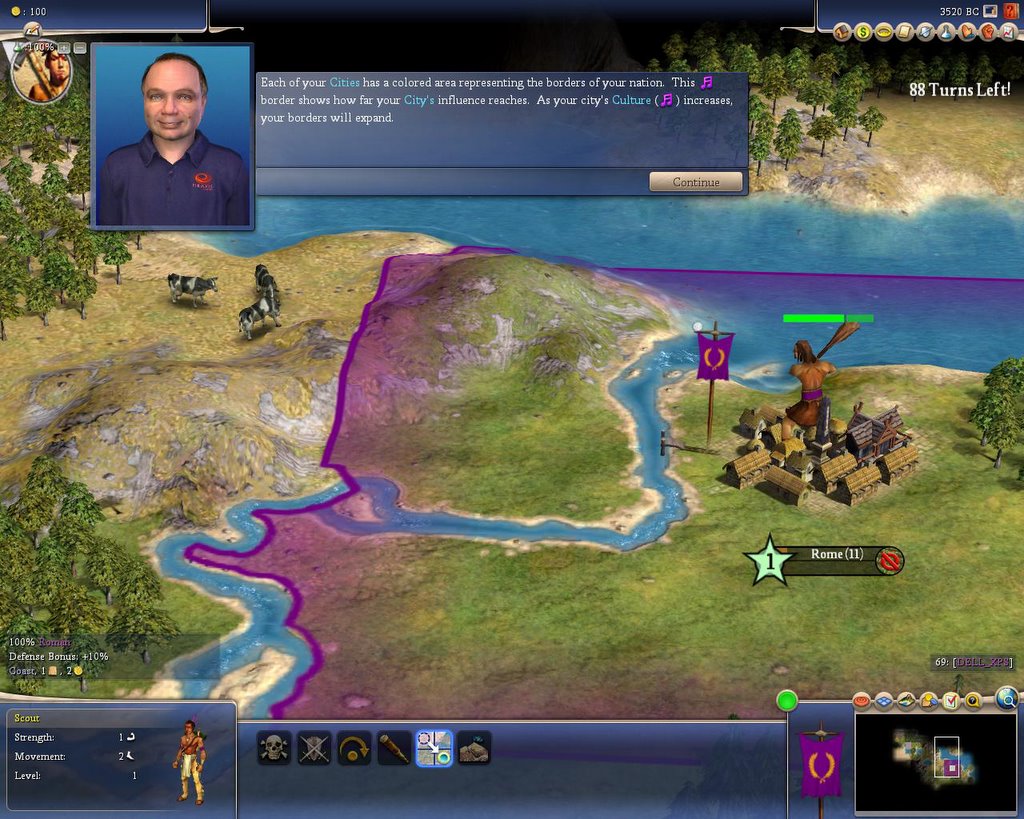
The Ninth Paradox of Educaitonal Simulations states that a good educational simulation takes traditional linear training just to use.
SimWord of the Day: Constituents
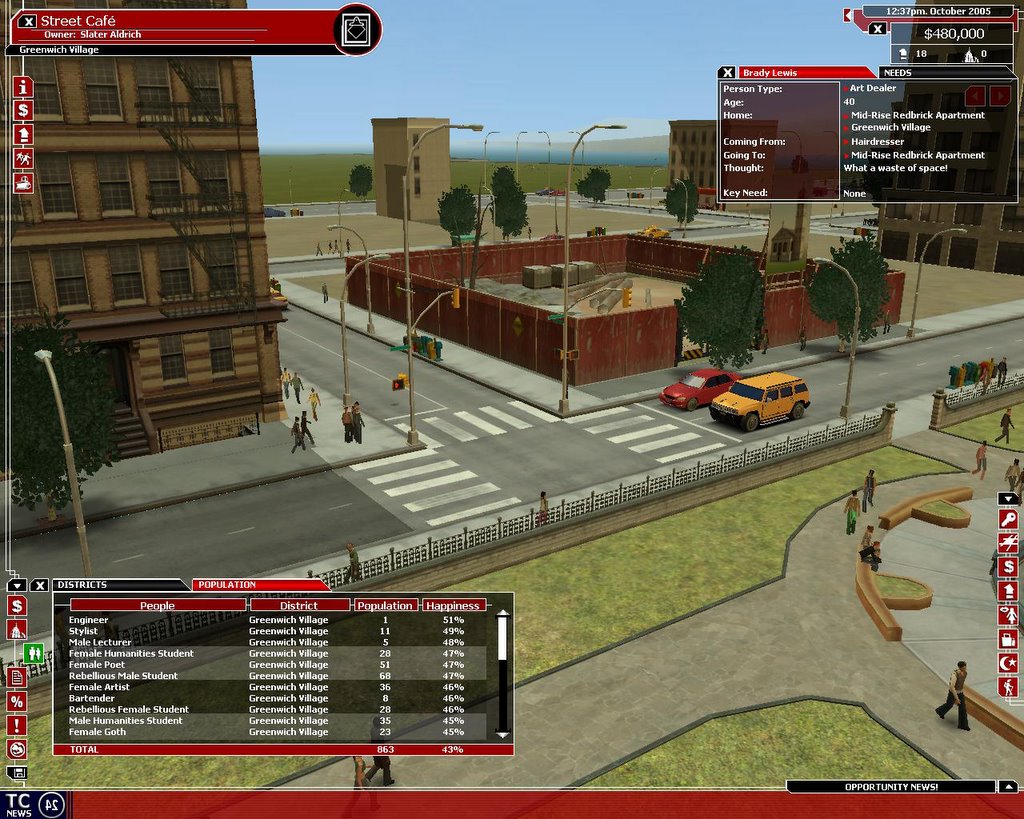 We have talked a bit about units, little creatures that interact in a computer game or educational simulation.
While most simulations have broad categories of units, increasingly when describing constituents, be they customers or voters, the more accurate simulations use at least ten or fifteen variables to capture attributes such as spending ability, preferred/trusted media, relationships with other units, and interests and concerns.
Then, when it comes to such questions as "will they buy from you or a competitor?" "for whom will they vote?" or "are they happy?" the sim does the necessary fuzzy logic to come up with a discreet answer.
In physics, we have wrestled with the question of: is something a wave or a particle?
Simulation designers will likewise wrestle with the question, is behavior best modeled by an abstract high level system, or by creating individual units.
Thursday, January 19
Teaching Simulation users to do their own After Action Review
At the end of each play of SimuLearn's Virtual Leader, a student see a series of charts that provide reflections on his or her performance. Here is a piece that we created to help students evaluate their own performance.
Tuesday, January 17
SimWord of the Day: Tracking Quests
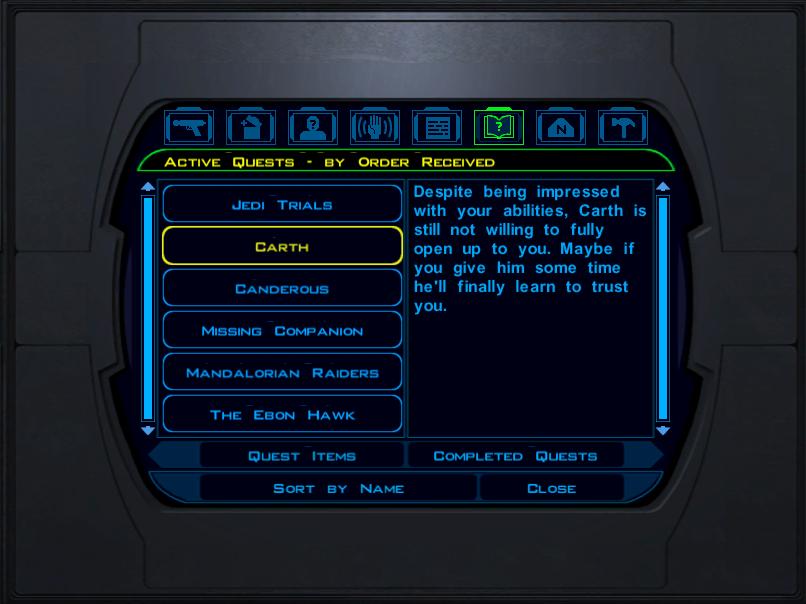 Pedagogy in educational simulations is that layer on top that makes things easier to understand. It includes charts and advice, as well as prereading and after action reviews. Done well, it speeds the learning and avoids the development of superstitious behavior.
One truism of edSims is that the same pedagogy that helps in doing the simulation also helps people understand real life. In fact, some early educational simulations had better pre-canned pedagogy than simulation, and enterprises stripped away the simulation and just deployed the pedagogy.
A nice piece of pedagogy is a constant list of core activities/goals/quests, with updates on little steps either completed or that need to be completed. This is especially useful where there are more than two quests going on at a time, like in this example from Star Wars: Knights of the Old Republic.
Monday, January 16
SimWord of the Day: Big Skills
There are a list of skills that could be classified as soft skills, but I prefer the term "Big Skills." These skills have a few attributes:
- These skills are critical to almost any job, but more than vocational, they are truly life skills.
- We practice them, in some form or another, almost every day.
- Schools, self-help book, and enterprise training programs have done a terrible job at facilitating their adoption, although they talk incessantly about them.
I know I have given various lists before, but enough people have emailed me about them that I beg your indulgence in posting them again. These skills include:
- Business Process Improvement and Business Process Reengineering:
- Contracting, Sourcing and Outsourcing :
- Communication.
- Conflict Management
- Cost Benefit Analysis
- Creating and using boards and advisors
- Creating new tools
- Decision-making
- Ethics
- Innovation/adaptation
- Leadership
- Negotiation
- Nurturing/stewardship
- Project Management/ Program Management
- Relationship management
- Researching
- Risk Analysis, Management/Security
- Solutions sales
- Teamwork
- Turning around a bad situation
Some call these 21st century skills, which they are, but they are also 20th century, 19th century, 18th century... and so on.
My premise is that educational simulations will make considerable headway in allowing the formal development of these skills, and that they will be hard to scalably teach without using simulations.
Sunday, January 15
Watson: Come Here, I Need You
A couple of years ago, I was discussing the timeliness of training with a colleague. See said to me, "It would be ideal if we could have the right training ready when the employees asked us for it." I responded, "No, ideal would be that we have learning content ready before they ask for it."
Recently I ran across a tool that tries to do just that. Watson 2.0 is a nifty little search tool that sits in a sidebar on your desktop. When you work in any one of several programs (right now it supports Word, Powerpoint, Outlook, Internet Explorer and Firefox on the PC), it analyzes the content in your document and automatically conducts a search on the key words it's come up with.
Watson returns the results from 5 domains of content - the Web, News, Blogs, Shopping, and Desktop. In the free version, which I have loaded for the time being - it searches are of the entire web.
With the professional (for pay)version, you can eliminate specific sites or specify sites for Watson to definitely include as high priority. You can also, in enterprise wide installations, have it search your intranet.
Check out the screen clip I took when I loaded my resume into Word and let Watson do it's thing. (click on the image to see a larger version.) Watson 2.0 is to the right. The terms highlighted in yellow are the search terms Watson used. Doing this with my resume has lead me to some very good professional, as well as developmental, resources that I had not yet stumbled upon. For those wondering what "Shopping" hits came up for my resume, it was primarily books on training. You wierdos!
This last feature really sounds like a potential winner. I can imagine working on a prosposal at work and having all the historical data that is related to my project presenting itself to me as I type! I wouldn't have to go research it. It'd be there as I need it. Talk about capturing corporate knowledge in a useful fashion!
Check out Watson 2.0. The free version has most of the functionality of the for a fee version, so you won't be out anything but your time.
Recently I ran across a tool that tries to do just that. Watson 2.0 is a nifty little search tool that sits in a sidebar on your desktop. When you work in any one of several programs (right now it supports Word, Powerpoint, Outlook, Internet Explorer and Firefox on the PC), it analyzes the content in your document and automatically conducts a search on the key words it's come up with.
Watson returns the results from 5 domains of content - the Web, News, Blogs, Shopping, and Desktop. In the free version, which I have loaded for the time being - it searches are of the entire web.

With the professional (for pay)version, you can eliminate specific sites or specify sites for Watson to definitely include as high priority. You can also, in enterprise wide installations, have it search your intranet.
Check out the screen clip I took when I loaded my resume into Word and let Watson do it's thing. (click on the image to see a larger version.) Watson 2.0 is to the right. The terms highlighted in yellow are the search terms Watson used. Doing this with my resume has lead me to some very good professional, as well as developmental, resources that I had not yet stumbled upon. For those wondering what "Shopping" hits came up for my resume, it was primarily books on training. You wierdos!
This last feature really sounds like a potential winner. I can imagine working on a prosposal at work and having all the historical data that is related to my project presenting itself to me as I type! I wouldn't have to go research it. It'd be there as I need it. Talk about capturing corporate knowledge in a useful fashion!
Check out Watson 2.0. The free version has most of the functionality of the for a fee version, so you won't be out anything but your time.
SimWord of the Day: Scoring
It is a mainstay of computer games, sports, classrooms, even standardized tests - the score. It is the single number that allows easy comparison and ranking. Usually the higher the score the better, although there are a few exceptions like golf. A is good. F is bad.
If you believe more in evaluation than formal learning, you might shoot for a scoring system that follows a nice bell curve, with some winners, some loosers, and most lumped in the middle.
We like to pretend that academic scores/grades are instructional, but really they are motivational. The reason to work hard is to get a good score, as opposed to using the score to figure out how to improve.
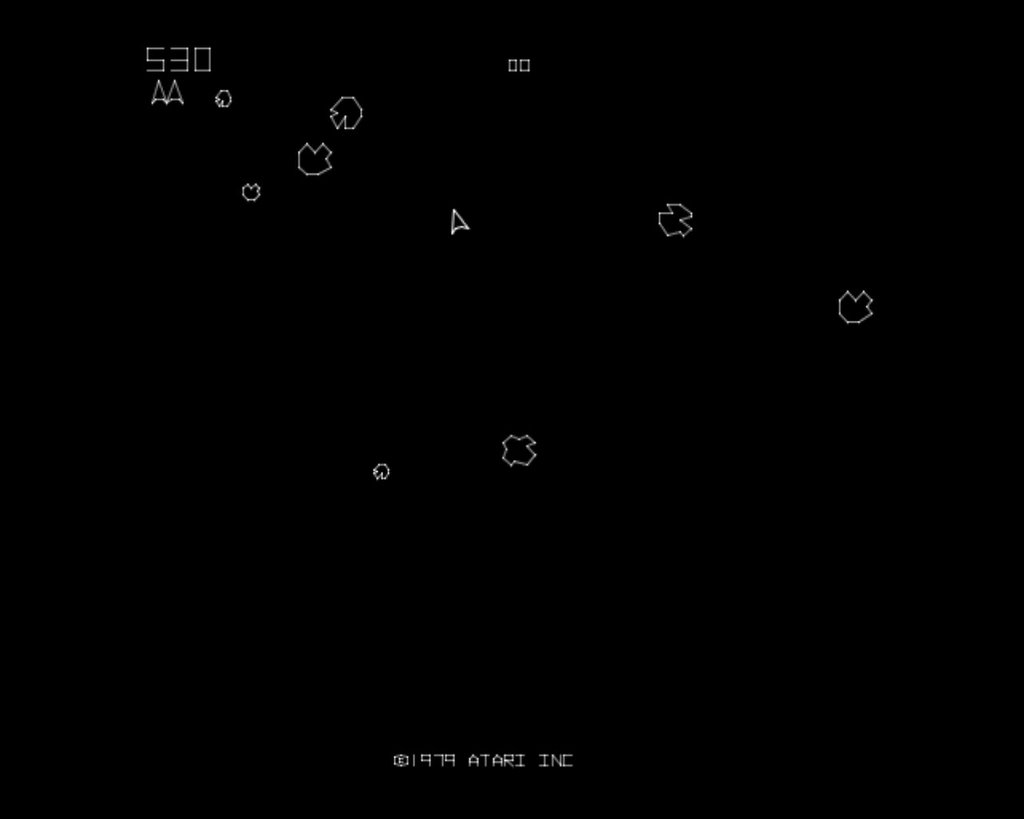
We also like to pretend that scores are scientific, when in fact they represent a massive editorialization of what is important, and by how much. Shooting a big asteroid is 50 points. Shooting a little asteroid is 100 points. Dodging an asteroid is worth nothing.

Scores in educational simulations seem to work best if they are built around the academic standard of
If you believe more in evaluation than formal learning, you might shoot for a scoring system that follows a nice bell curve, with some winners, some loosers, and most lumped in the middle.
We like to pretend that academic scores/grades are instructional, but really they are motivational. The reason to work hard is to get a good score, as opposed to using the score to figure out how to improve.
We also like to pretend that scores are scientific, when in fact they represent a massive editorialization of what is important, and by how much. Shooting a big asteroid is 50 points. Shooting a little asteroid is 100 points. Dodging an asteroid is worth nothing.
Scores in educational simulations seem to work best if they are built around the academic standard of
- 69 and below = D = unacceptable
- 70-79 = C = good try but plenty of room for improvement
- 80-89 = B = solid
- 90 - 100 = A = great
This seems natural to those on the outside and a good cultural standard to follow (imagine using an educational simulation twice, the first time getting a score of 24, and the second time, 190), but for designers, squeezing the world of outcomes into that range is as natural as being a yoga master. And putting absolute numbers to actions should make anyone at least a little uncomfortable (try putting numeric values to the activities you did today).
Having scores unquestionably increases usage and focus. But the greater the reliance on scores for motivation, the more students will worry less about learning the material and more about gaming the system - finding logic shortcuts to exploit, and actually subvert the learning.
Friday, January 13
SimWord of the Day: The Eighth Paradox of Educational Simulations
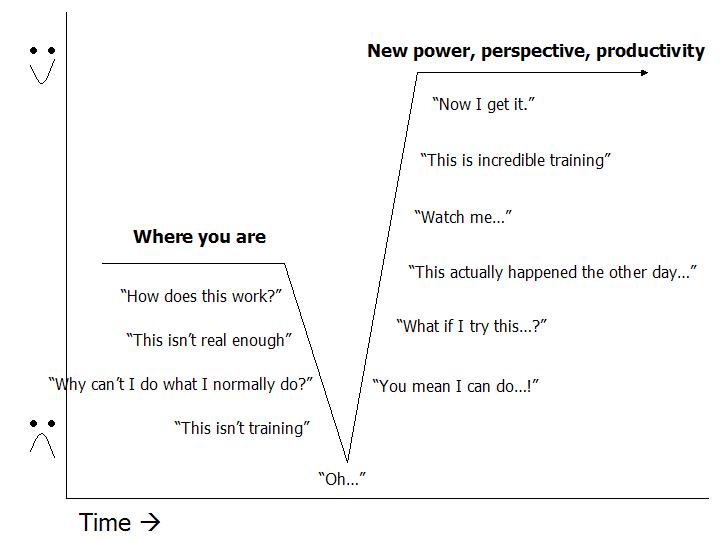
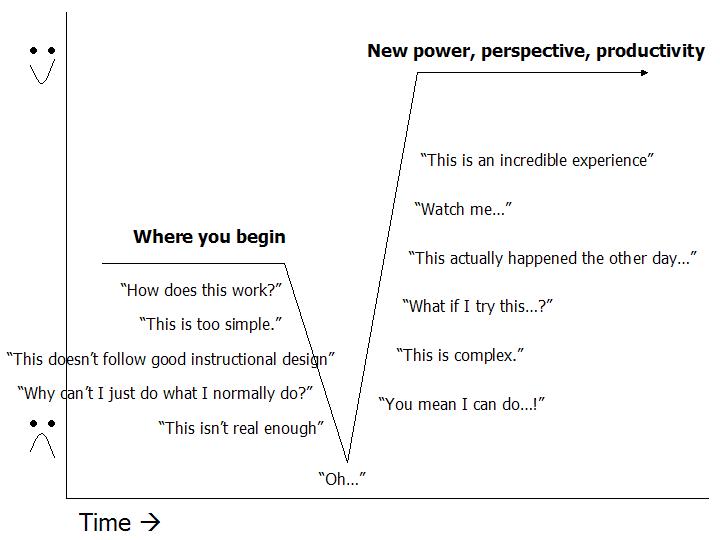
The eighth paradox, and this is true of any transformation (from getting a big promotion to moving to a better house), is that things get worse before they get better, even when the transformation is sought after and desired. New clarity only follows frustration. New power comes from not being able to do things the way you have in the past.
Maybe this song will help, I mean chart will help, about the experience of going through a tranformative educational simulation:
Maybe this song will help, I mean chart will help, about the experience of going through a tranformative educational simulation:
Real simple why Web 2.0 is important...
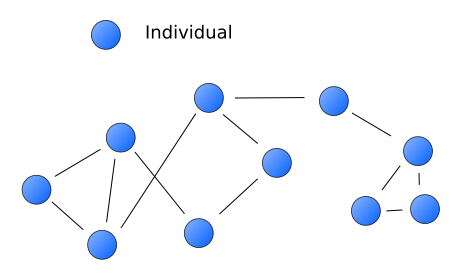
...because it exposes and links. I know this is probably so clear to those of us who are immersed in it but I think we need to "stay on message" with other folks. Social networking, Web/Learning 2.0 - whatever - these are all aimed at exposing, revealing and linking. If your situation doesn't call for that, these technologies aren't right for you - no harm no foul. Why is this important?
...because informal learning will just stay something you do personally within your own close-knit network and not a phenomenona we understand and can use to imporove organization performance UNLESS we use some of these tools and the concepts behind them to reveal, expose and illuminate the networks of informal learning that they are creating. I have this feeling that we need a whole new lexicon for talking about the instructional impacts of furl, del.icio.us, frappr, etc. Of course, its early - I could be wrong.
P.S. Clark - you must promise to collect all of your SimWords somewhere....
Thursday, January 12
SimWord of the Day: Communities
The less someone knows about computer games, the more he or she thinks of them as a solitary activity. Instead, computer games have driven and modeled online virtual organizations, and educational simulations will have to go even further.
Roles when there are multiple people include:
Roles when there are multiple people include:
- opponents and team members,
- buddies,
- instructors,
- facilitators,
- leaders and followers,
- mentors,
- support and front-line, just to name a few.
- Message board/Forum
- Application sharing
- Authentication
- Avatars to represent players
- Chat rooms/Instant Messaging
- Public/private message
- Email Integration
- Calendaring
- Video Conferencing
- Floor control for the facilitator
- Whiteboard
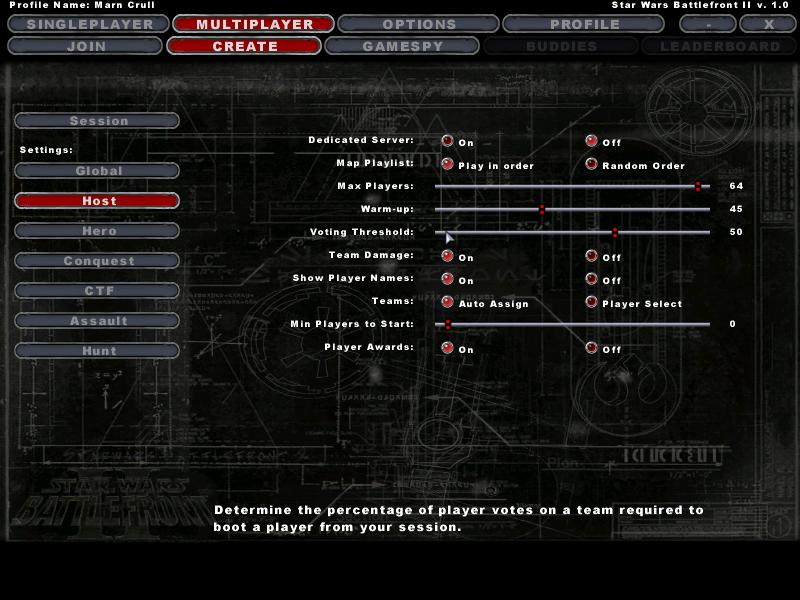
- Massively Multiplayer (MMP) components, such these from Star Wars Battlefront II

Subscribe to:
Posts (Atom)

 Posts
Posts